Edge Federated Learning Platform
Overview & Objective
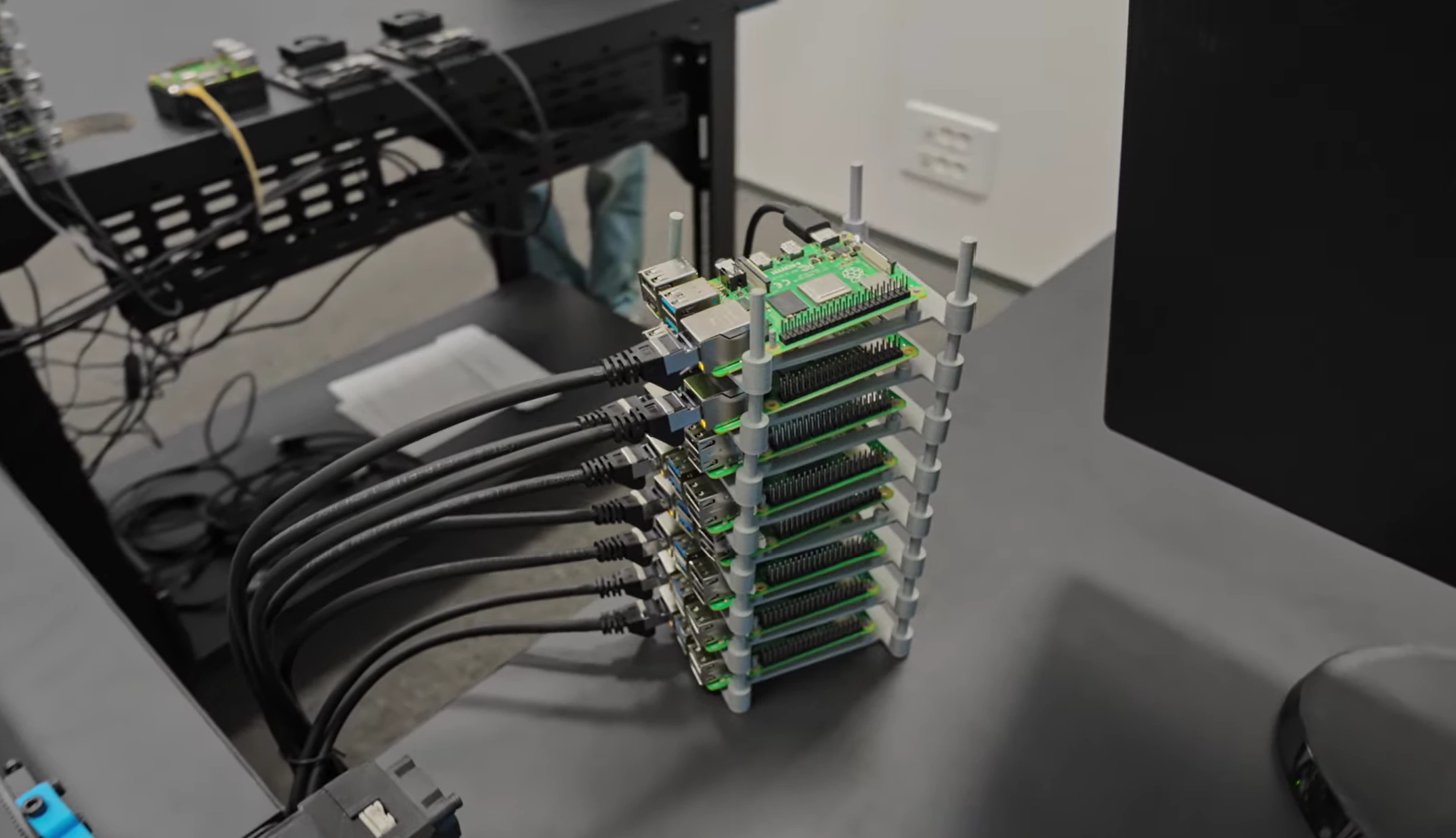
Designed, implemented, and evaluated a distributed Federated Learning (FL) testbed platform at LINEACT CESI Research Laboratory across a physical heterogeneous 20-node cluster (Raspberry Pi 4/5, NVIDIA Jetson, and Linux aggregation servers). The system integrates state-of-the-art decentralized collaborative ML algorithms into an asynchronous WebSocket and MQTT pipeline, benchmarking edge model convergence on heterogeneous time-series streams under simulated bandwidth limits and physical node dropout constraints.
Research Context & Distributed AI Vision
Centralized machine learning pipelines require collecting raw edge sensor data onto remote cloud data centers, creating privacy vulnerabilities, bandwidth saturation, and compliance bottlenecks under EU GDPR. Federated Learning addresses this by training local models on the edge devices themselves and only transmitting gradient updates or model parameters to an aggregation server. At LINEACT Research Laboratory, this project investigated the practical convergence behavior and network overhead of FL across heterogeneous embedded compute units.
System Architecture & Communication Topologies
The platform coordinates model synchronization through a dual transport layer: MQTT handles lightweight heartbeat telemetry and parameter broadcast announcements, while secure bidirectional WebSockets stream compressed neural network weight deltas.
Aggregation Server
Coordinates training rounds, applies FedAvg / FedProx aggregation with momentum, and tracks global validation loss.
Edge Worker Nodes
Run on physical Raspberry Pi 4/5 and NVIDIA Jetson hardware, executing local backpropagation on isolated local datasets.
Dynamic Fault Tolerance
Asynchronous round completion allows the global model to progress without stalling if high-latency edge nodes disconnect.
Key Engineering Highlights
Heterogeneous 20-Node Physical Cluster
Engineered a real-world edge cluster combining Raspberry Pi 4/5 SBCs, NVIDIA Jetson edge accelerators, and centralized aggregation servers.
Asynchronous Stream Pipeline
Integrated FedAvg and decentralized consensus algorithms into low-latency WebSocket and MQTT pub/sub data streams.
Edge Model Convergence Under Network Constraints
Empirically evaluated loss convergence, packet-loss resilience, and gradient quantization across non-IID local sensor partitions.
Docker Swarm Orchestration
Automated node provisioning, containerized workers, and aggregation metrics collection for reproducible multi-node experimental benchmarks.